How to play Blumgi Rocket?
- W: Drive
- S: Drive or control movement
- Up Arrow: Drive
- Down Arrow: Drive
- A: Drive
- D: Use the rocket
Game Features
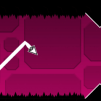
Blumgi Rocket combines racing with physics-based movement, making every level feel different from a traditional racing game. The following features create its main gameplay experience.
Physics-based jumping system
The jumping system focuses on angle and power control. Instead of automatically following a fixed jump pattern, your vehicle reacts to its movement and the surrounding terrain.
This means that two jumps can have different results depending on how you approach them. Speed, direction, and rocket power can all influence your landing.
Players need to understand the relationship between these elements. A powerful jump is not always the best jump. Sometimes, a controlled and lower jump can help you land in a better position and continue moving without losing momentum.
Diverse level design
One of the most attractive parts of Blumgi Rocket is its variety of environments. Levels can include different terrain types, which means you cannot rely on one strategy for every section.
It includes steep mountain slopes and hills, underground tunnel systems, challenging obstacle courses, multi-terrain landscapes, and physics-based puzzle sections
Mountain areas can require careful control because of their steep slopes. You may need to build enough speed before climbing while also preparing for the descent on the other side.
Hills can also launch your vehicle into the air. This creates opportunities for rocket boosts and aerial movement.
Underground tunnels provide a different type of challenge. Instead of dealing with wide open areas, you may need to control your vehicle through tighter paths.
The change from open slopes to tunnels can also affect how you approach your movement. You need to be ready to adjust your speed and direction when entering a tunnel.
Obstacle sections test your ability to react quickly. You may need to combine normal driving with rocket boosts to get past difficult areas.
Rather than simply moving as fast as possible, observe the obstacle ahead and decide how much power you need.
Some levels combine several terrain types. A single run may take you from a slope to a jump, then into a tunnel and across another obstacle.
These mixed environments make route planning important. You need to constantly adapt your movement instead of following one fixed pattern.
Some areas also work like physics puzzles. The goal is not only to reach the next section but also to understand how your vehicle will react to the terrain.
Experimenting with speed, angles, and rocket power can help you discover the most efficient solution.
Mid-air rocket boost
The rocket can be used while your vehicle is airborne. This gives you limited control over your movement after leaving the ground.
For example, if your vehicle is slightly too far from the landing area, a short rocket burst may help correct its position. This makes the rocket useful not only for acceleration but also for aerial adjustments.
However, the boost is limited, so you need to use it carefully. Saving some rocket power for an important jump can be more useful than wasting it early.
Fast restart loop
Blumgi Rocket encourages experimentation through its fast restart system. If you fail a jump or lose control, you can quickly try the level again.
This is useful because learning the physics often requires several attempts. Instead of being discouraged by failure, you can treat each attempt as a chance to understand the terrain.
You might discover that a jump works better with less speed, or that a rocket burst should be used slightly later. After several attempts, these small adjustments can lead to much faster completion times.
How to get high scores in Blumgi Rocket?
Getting high scores in Blumgi Rocket is mainly about completing levels quickly while maintaining good control. Speed is important, but careless movement can cause crashes and force you to restart.
Master boost timing
Rocket timing can have a major effect on your performance. Hold the rocket button to accumulate power and then release it when you need strong propulsion.
Using more power can help you break through difficult terrain or gain speed before a major jump. However, the goal is to use the power at the right moment rather than simply holding it whenever possible.
Use slow-motion effects carefully
Slow-motion effects can help you judge difficult paths and understand your position in the air. They are particularly useful when performing aerial movements that require precise timing.
Use this opportunity to observe your trajectory. If you can understand where your vehicle is going before landing, you can make better decisions about when to use the rocket.
Learn the rhythm of each terrain
Different environments have different movement rhythms. A steep slope may require acceleration, while a tunnel may require more careful control.
Try to remember how each section works. When you become familiar with the sequence, you can prepare your next movement earlier instead of reacting at the last second.
Switching between slopes and tunnels with the right boost acceleration can help you maintain momentum throughout the level.
Complete levels quickly
Fast completion is important if you want to set better records. Once you understand a level, focus on reducing unnecessary movements.
Try to find the most efficient way through each section. A smooth run with fewer mistakes can be much faster than a run that uses maximum speed but requires several recoveries.
Tips and tricks
Hold the rocket button for maximum propulsion
Holding the rocket button longer can build more propulsion power. This can be useful when you need to cross a large gap, climb difficult terrain, or accelerate toward a jump.
However, do not assume maximum power is always necessary. Learn which sections actually require a strong boost.
Use rocket bursts strategically
Rocket bursts are especially useful for maintaining momentum. Instead of using the rocket constantly, save it for important moments.
A well-timed burst can help you accelerate up a slope or correct your position after a jump.